

The Female Gaze, Applied to Brand: What Iconic Founders Saw That Others Missed
From Miuccia Prada to Bobbi Brown, the founders who shaped entire industries had one thing in common: a system, a voice, and an unwavering point of view. Here’s the brand lesson behind each one.
Sophie O.P.
3/4/20265 min read


March arrives and, almost without realising it, everything around us starts to shift. The light changes. The air carries something new. And somewhere between the first coffee of the morning and an afternoon scroll through a feed that looks exactly the same as it did in January, a quiet question surfaces: what would it look like if I built something that actually lasted?
This month, we’re not celebrating women with generic quotes on pastel backgrounds. We’re doing something more useful: we’re studying them. Specifically, five founders who looked at their industry and saw something everyone else had missed — and then built a brand around that very thing.
Not because their stories are aspirational in a distant, untouchable way. But because the decisions they made — the ones that felt counterintuitive, even risky at the time — are decisions you can make too. Right now. With your brand.
Let’s begin.
1. Miuccia Prada - Prada
When Miuccia Prada took over her family’s leather goods house in 1978, the brand was fading. A respected name, yes, but one that had lost its edge. What she did next is still studied in business schools: she didn’t try to make Prada more beautiful. She made it more intelligent. She introduced the deliberately unglamorous — nylon, utilitarian shapes, deliberately “unattractive” cuts — and framed it all within a discourse of intellectual rigor. The ugly was a statement. The restraint was a philosophy.
Prada under Miuccia became proof that a brand doesn’t need to be universally loved to be extraordinarily powerful. It needs a point of view so specific, so coherent, that the right people feel it viscerally. She didn’t inherit a brand — she built an entirely new language inside an existing one.
The lesson: A strong brand doesn’t chase beauty or consensus. It commits to a point of view — even an uncomfortable one — and holds it with enough conviction that the right audience finds their way to it.


4. Ilse Crawford - Studioilse
Ilse Crawford built one of the most quietly influential interior design studios of the last three decades. Through Studioilse, the practice she founded on a single, unwavering premise — that design should serve human wellbeing, not visual spectacle — she shaped spaces that feel, before they impress. Hotels, homes, public buildings: every project begins with the same question. Not “how should this look?” but “how should this make people feel?” Before “human-centred design” became a LinkedIn buzzword, she was already living it.
Her brand is, in the purest sense of the word, a system. Every project — from the interiors of a hospital to a hotel lobby to a furniture collection — breathes the same philosophy. You don’t need to see a logo to know it’s hers. The coherence is so deep it’s sensory. That kind of recognition isn’t built through visibility. It’s built through consistent, considered decisions made over years.
The lesson: Brand recognition at its deepest level is not visual — it’s experiential. When your philosophy is genuinely embedded in every decision, your brand becomes identifiable long before anyone reads your name.


2. Stella McCartney - Stella McCartney
In 2001, when Stella McCartney launched her label without fur, without leather — unthinkable in luxury fashion at the time — the industry responded with polite skepticism. You couldn’t do premium without animal materials. Everyone knew that.
What Stella understood — before the conversation even existed in mainstream culture — was that values are not a marketing strategy. They are the brand. She didn’t add ethics as a feature; she built her entire system around them. Every fabric decision, every campaign, every communication was an expression of the same coherent belief. Two decades later, the industry has shifted to catch up with her. She didn’t follow the market. She informed it.
The lesson: When your values are genuinely embedded in your brand system — not layered on top of it — they become your most distinctive asset. The brands that last don’t adapt to culture. They contribute to it.
3. Bobbi Brown - Bobbi Brown Cosmetics
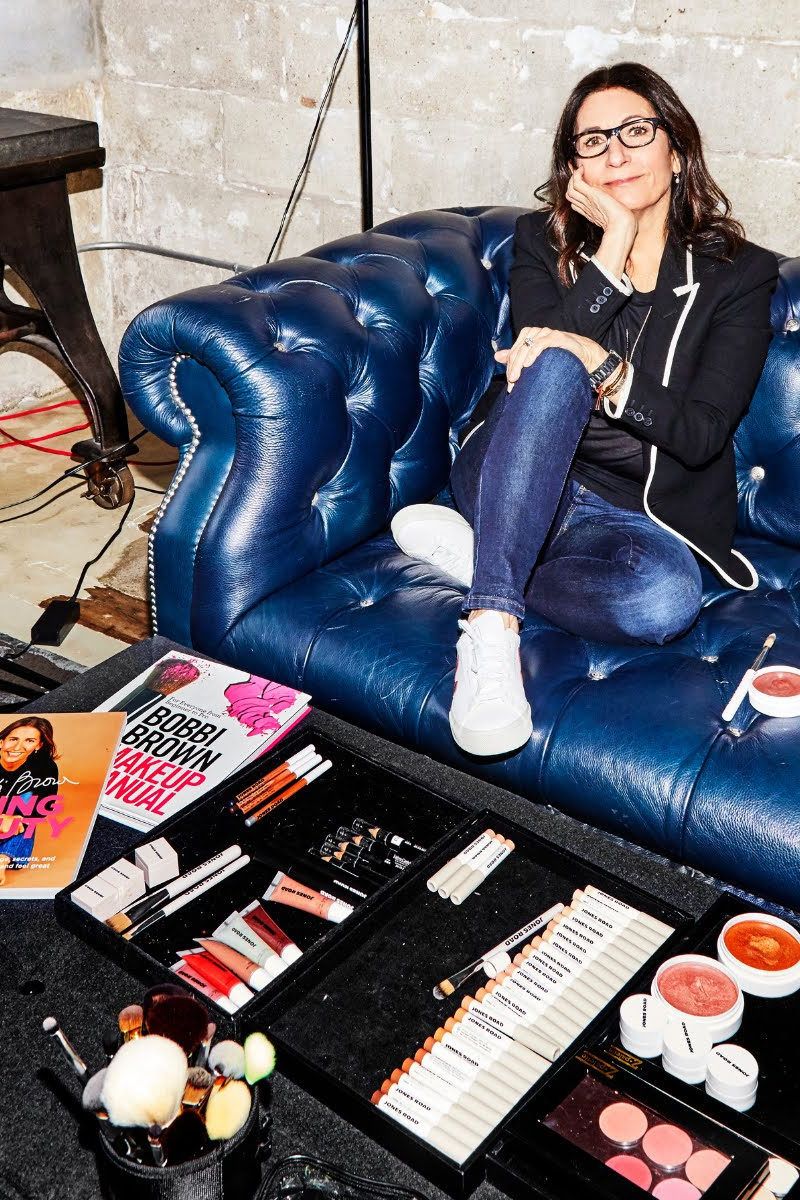
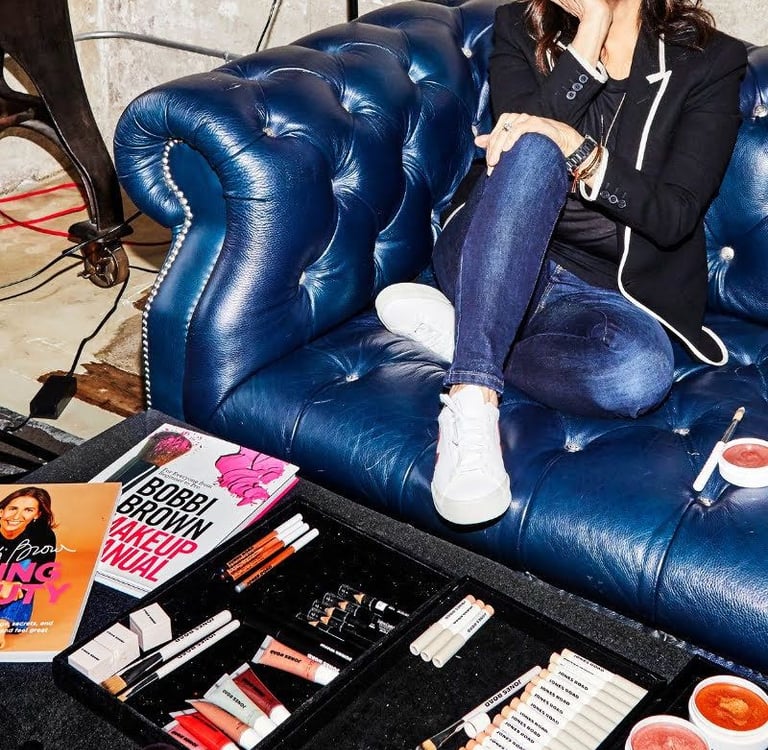
1991. The beauty industry spoke one language: transformation through artifice. More coverage, more color, more correction. Bobbi Brown looked at that conversation and asked a different question entirely: what if the goal wasn’t to change how women looked, but to let them look like themselves?She launched with ten brown-based lipsticks — a small, considered edit — and a brand narrative built around real skin, real faces, real women.
What she built wasn’t just a cosmetics company. It was a counter-narrative with a coherent visual and verbal system. The packaging was clean and unpretentious. The language was direct and warm. The product was the message. In an era of maximalism, she chose clarity — and clarity turned out to be the most distinctive thing in the room.
The lesson: Sometimes the most powerful brand move is subtraction. Identify what everyone else is overclaiming — and build your entire system around the opposite. Restraint, when intentional, reads as confidence.

5. Natalie Massenet - Net-a-Porter
In 2000, selling luxury fashion online was considered not just niche but actively contradictory. Luxury was about touch, about atmosphere, about the ritual of entering a physical space. Natalie Massenet, working from a flat in London, saw something different: that the editorial experience — the story, the context, the curation — was the luxury, not the store.
She built Net-a-Porter not as an e-commerce site but as a magazine that happened to sell product. Every page was designed with the same intentionality as a fashion editorial. The brand voice was consistent, the aesthetic was considered, and the experience felt premium at every touchpoint — from the website to the iconic black packaging that arrived at your door. She didn’t adapt luxury to digital. She redefined what a luxury experience could mean.
The lesson: A considered brand experience doesn’t depend on the channel — it transcends it. When your brand has a clear system, it can live anywhere and still feel entirely like itself.


Now, what about your brand?
None of these women started with a perfect brand. Miuccia inherited something broken. Bobbi started with ten lipsticks and a conviction. Natalie had a laptop and a vision that most people didn’t understand yet.
What they shared wasn’t access, or budget, or industry connections. It was that they each knew, with unusual clarity, what they stood for — and they built a system around that, consistently, over time.
That’s the female gaze applied to brand. Not a trend. Not an aesthetic. A decision about what matters, made with discernment — and then held with enough consistency that the world eventually catches up.
If you’re reading this and feeling a quiet tension between what your brand currently communicates and what you know it could — that tension is information. It’s telling you something is ready to shift.
At Branding Confidential, that’s exactly where we begin. Whether you’re building from scratch with The Manuscript or refining what already exists with The Edition, the work is the same: finding the language your brand already speaks — and making it impossible to miss.
Your brand has a point of view. Let’s make it heard.